Home and Living
The Best 7 Remarkable Fans to Keep Cool Feeling – Tested


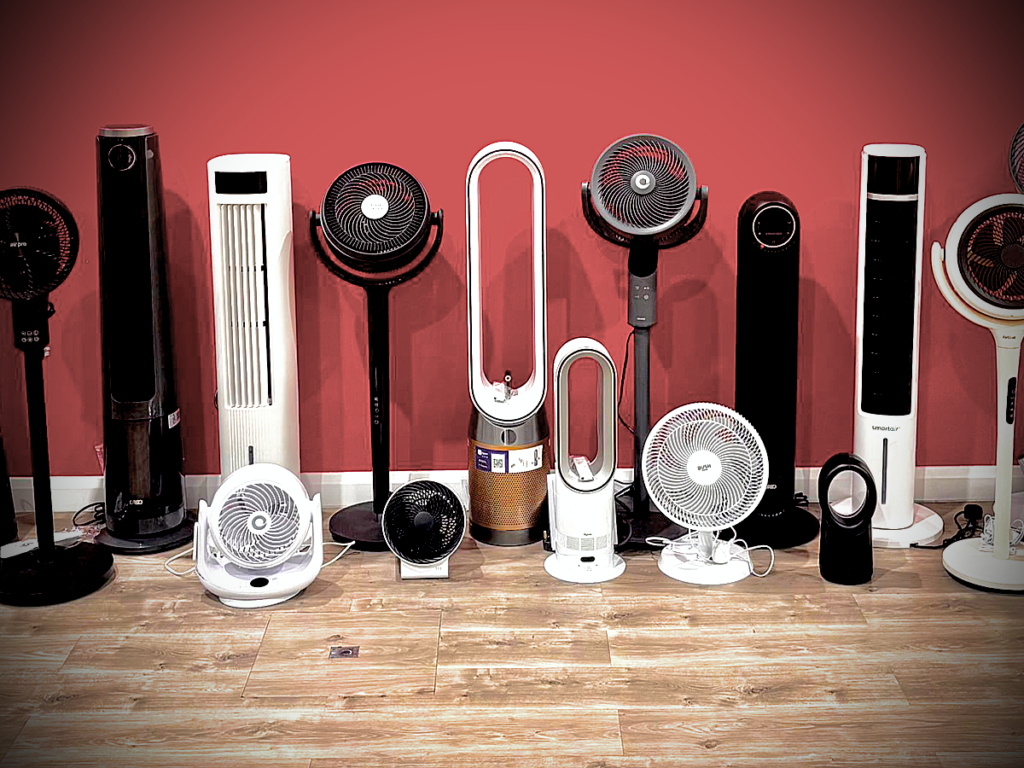
Fans to keep cool essentials. Hot days can turn a comfortable room into a place you do not want to be without fan. When the temperature rises, a good fan can make a huge difference.
The right fans to keep cool does more than move air around. It can create a steady breeze, improve airflow, reduce that stuffy feeling, and help you stay comfortable without running your air conditioner all day.
But with so many models available, choosing the right one can feel harder than it should.
That is where this guide comes in.
We rounded up seven types of fans to keep cool and looked at the features that matter most, including airflow, noise, speed settings, room coverage, portability, and energy use.
Whether you need something for your bedroom, home office, living room, or gaming setup, there is an option here worth considering.
Table of Contents
Fans to Keep Cool: What Should You Look For?
Before buying a fan, think about where you will use it.
A small desk fan may be perfect for your office but too weak for a large living room. A powerful floor fan can cool a bigger space, but it may take up more room.
Noise is another important factor. If you are a light sleeper, a loud motor can become annoying quickly.
You should also consider speed controls, oscillation, adjustable height, remote controls, and energy efficiency.
The best choice is not necessarily the most powerful fan. It is the one that delivers the right amount of airflow for your space.
1. Tower Fan: Best Overall for Everyday Cooling

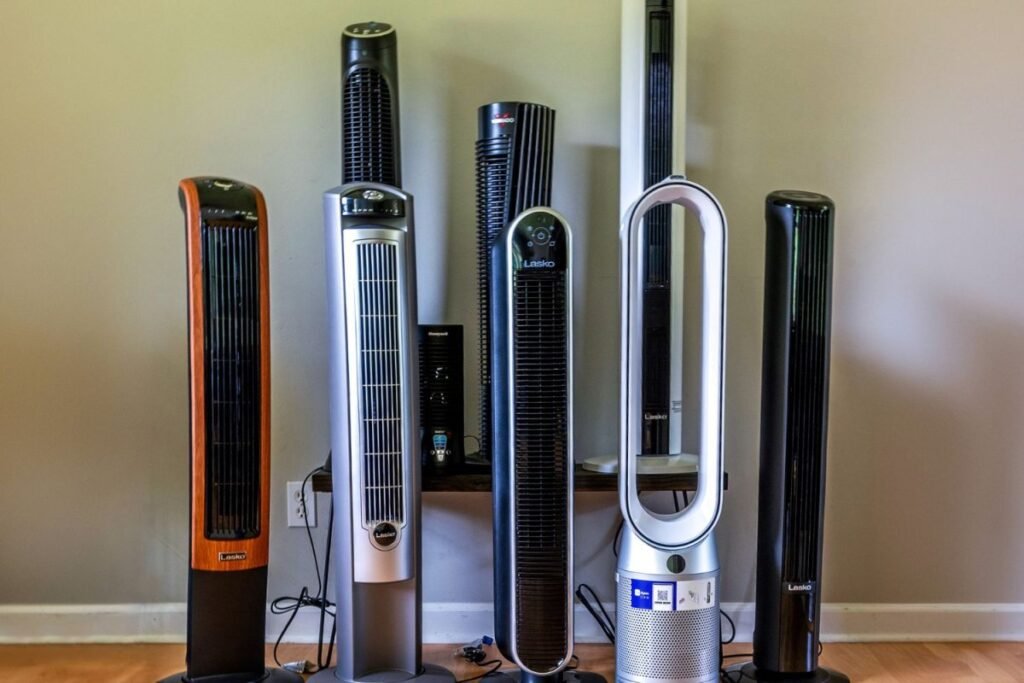
A tower fan is one of the easiest choices for everyday home cooling.
Its tall and slim design takes up very little floor space. That makes it especially useful in apartments, bedrooms, and smaller living rooms.
Many modern tower fans offer multiple speed settings and wide oscillation. Some also include a remote control and timer.
The airflow is usually smooth rather than extremely forceful. That can be a plus if you want comfortable circulation instead of a strong blast of air.
For people searching for fans to keep cool during long summer afternoons, a tower fan is a practical all-around choice.
Why We Like Tower Fans
– Slim design
– Good room coverage
– Multiple speed settings
– Often includes a remote
– Easy to move
– Works well in bedrooms and living rooms
A tower fan is also a good choice if appearance matters to you. Most models have a clean, modern shape that blends into a room better than a bulky traditional fan.
2. High-Velocity Floor Fan: Best for Powerful Airflow

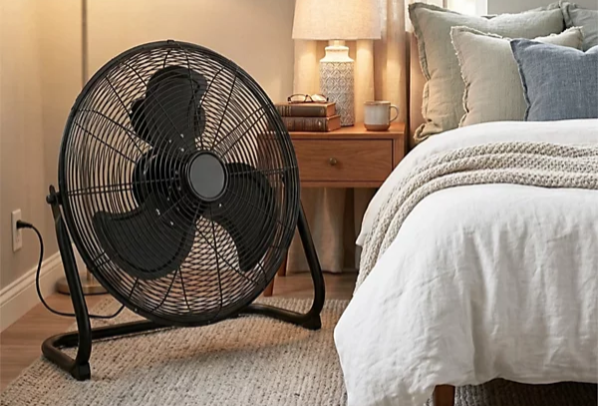
Sometimes you do not want gentle airflow.
You want to feel the breeze.
That is where a high-velocity floor fan comes in.
These fans are designed to move a large amount of air. They are useful in garages, workshops, large rooms, home gyms, and spaces that become especially hot.
The downside is noise. Powerful airflow often comes with a louder motor.
Still, if raw airflow is your priority, this type of fan can be hard to beat.
It is also useful when you need fans to keep cool in a room that does not have great natural ventilation.
Best Uses for a High-Velocity Fan
Place one near an open window or doorway to help move warm air out and bring cooler air through the room.
You can also angle it toward yourself while working out or doing household chores.
For maximum comfort, avoid pointing a very powerful fan directly at your face for hours. A slight angle can provide plenty of airflow without becoming uncomfortable.
3. Pedestal Fan: Best for Large Rooms

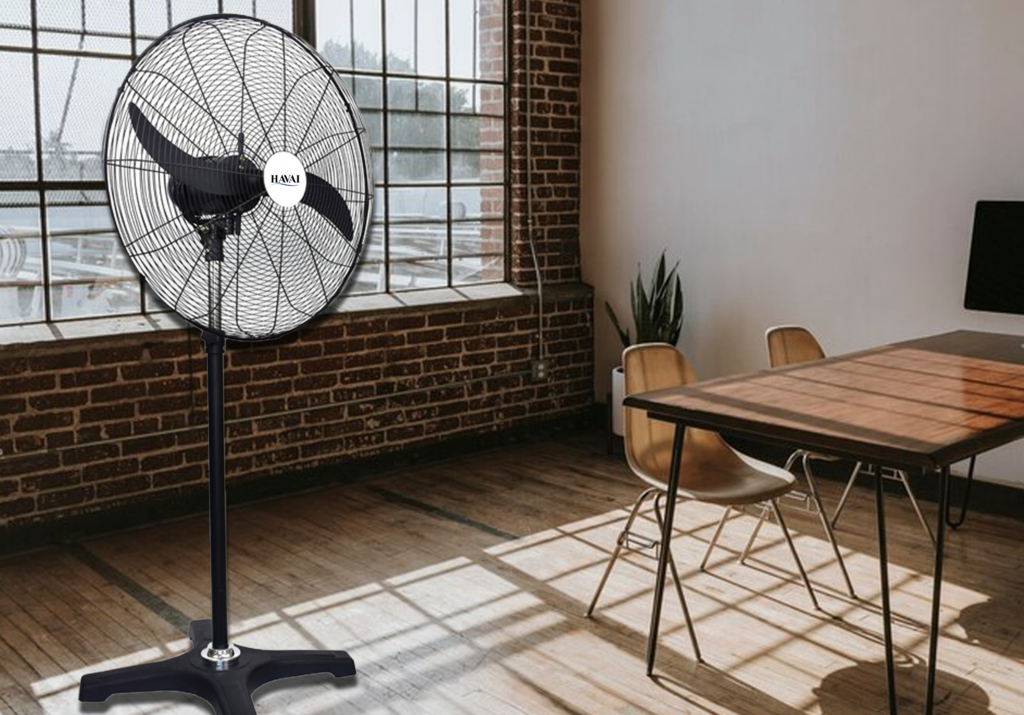
Pedestal fans have been popular for years, and there is a reason they remain a favorite.
They offer strong airflow while allowing you to adjust the height and direction.
That makes them useful when several people are sitting in different parts of a room.
Many pedestal fans also oscillate from side to side. You can usually choose between several speed levels.
A good pedestal fan can be one of the most effective fans to keep cool when you need airflow across a larger area.
What Makes Pedestal Fans Useful?
The adjustable height is the biggest advantage.
You can direct air toward a couch, desk, bed, or dining table without moving the entire fan.
They are also relatively affordable compared with some smart cooling appliances.
If you want strong performance without spending a lot, a pedestal fan deserves a spot on your shortlist.
4. Bladeless Fan: Best for Modern Homes

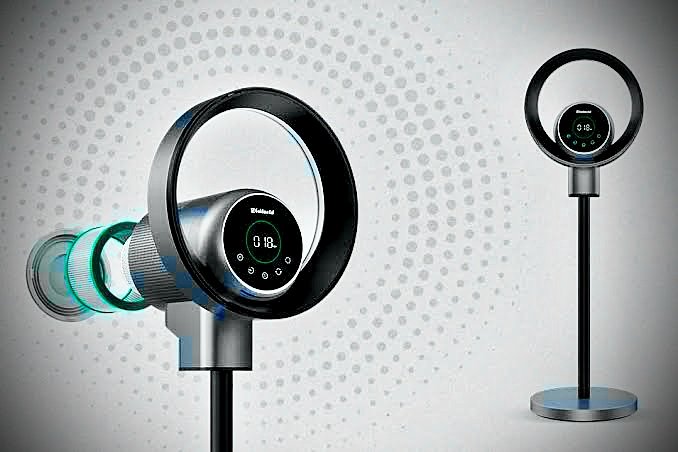
Bladeless fans have become popular because of their sleek appearance and easy-to-clean design.
Instead of exposed spinning blades, these fans use a different airflow design to circulate air.
They can be a great fit for households with children because there are fewer exposed moving parts.
Many premium models also offer features such as remote controls, timers, multiple airflow modes, and air-quality monitoring.
The biggest drawback is price. Some bladeless fans cost considerably more than conventional models.
Still, if design, convenience, and quiet operation are high on your list, this is an interesting option.
For anyone looking for stylish fans to keep cool, a bladeless model can combine everyday comfort with a modern look.
5. Ceiling Fan: Best for Bedrooms

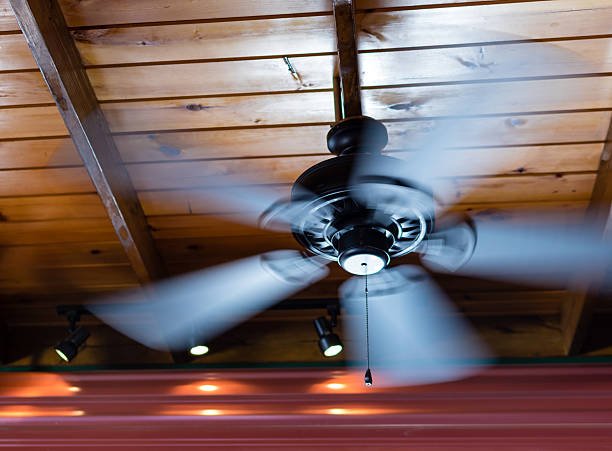
A ceiling fan is one of the best long-term cooling options for a bedroom.
Unlike portable fans, it does not use floor or desk space.
It also circulates air throughout the room rather than concentrating airflow in one small area.
When shopping for the best ceiling fans for cooling bedroom spaces, pay attention to blade size, motor quality, speed settings, and room dimensions.
A fan that is too small may not circulate enough air. A fan that is too large can produce more airflow than you actually need.
Fans to Keep Cool While Sleeping
A ceiling fan can make a bedroom feel cooler without dramatically lowering the actual room temperature.
That is because moving air helps sweat evaporate from your skin, creating a cooling sensation.
Look for a model with quiet operation and several speed settings.
A timer can also be helpful if you like falling asleep with airflow but do not want the fan running all night.
For bedrooms, comfort matters just as much as power.
6. Desk Fan: Best for Home Offices and PCs

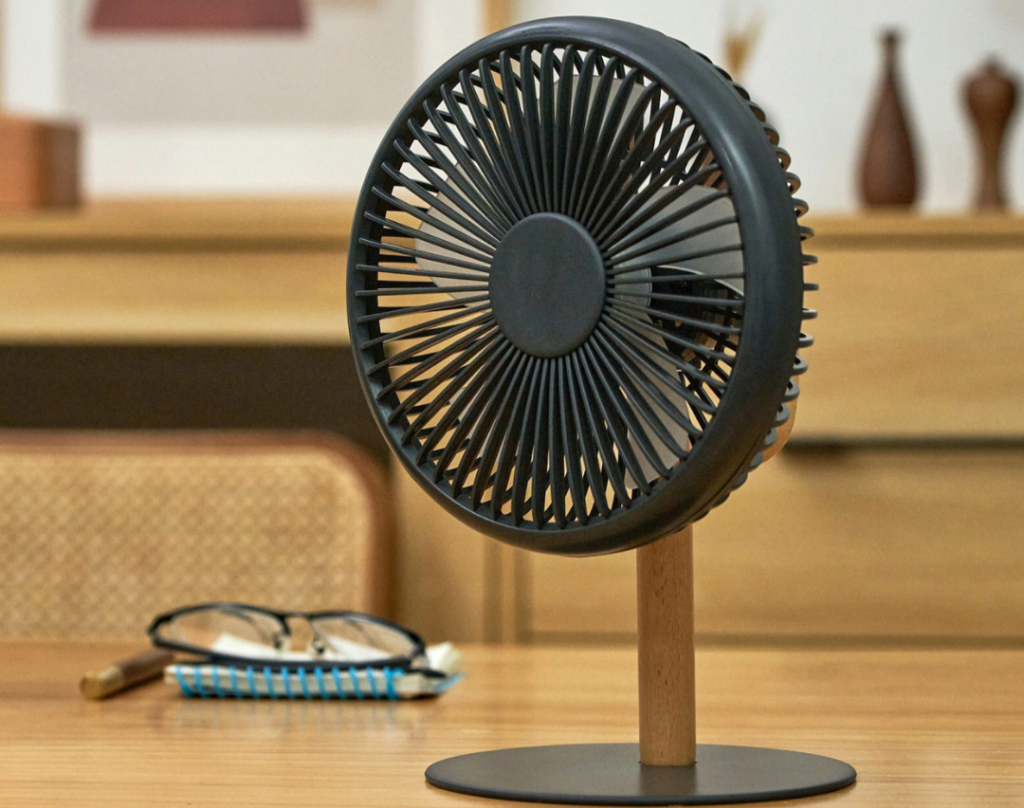
If you spend most of your day at a desk, you may not need to cool the entire room.
A compact desk fan can direct airflow exactly where you need it.
This makes it useful for home offices, study areas, and gaming desks.
The best models are compact but still offer several speed levels.
Some can tilt upward or downward, allowing you to adjust the airflow without moving the base.
If your main concern is keeping yourself comfortable while working, a desk fan can be one of the simplest fans to keep cool with.
Best Fans for Cooling PC Setups
If you are searching for the best fans for cooling PC systems, there is an important distinction.
A room fan cools you and improves general air circulation. PC case fans are designed specifically to move air through the computer case.
For a gaming PC or powerful workstation, good case airflow can help prevent heat from building up around components.
Look for compatible case fans with suitable airflow and static-pressure ratings.
Also make sure your case has a sensible intake and exhaust setup.
A desk fan can help keep the area around your PC comfortable, but it should not replace proper internal case cooling.
7. Misting Fan: Best for Outdoor Cooling

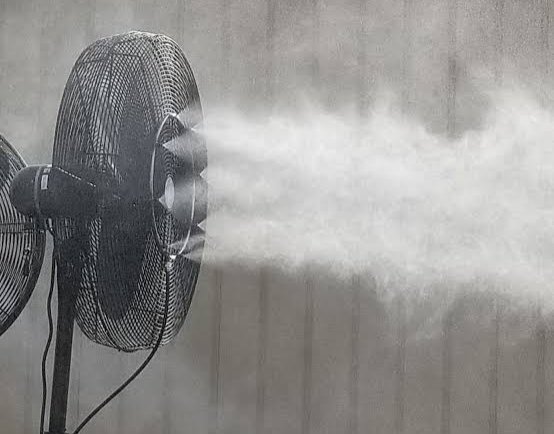
Planning a backyard gathering?
A misting fan may be worth considering.
These fans combine airflow with a fine water mist. As the water evaporates, it can create a cooling effect that is especially noticeable outdoors.
They can work well on patios, decks, porches, and outdoor seating areas.
However, humidity matters.
Misting is generally more effective in dry climates because water evaporates more easily. In very humid weather, the effect may be less noticeable.
If you are trying to find fans to keep cool during outdoor activities, a misting fan can be a useful option when conditions are right.
Fans to Keep Cool: What About Fans That Cool Like Air Conditioners?
You may have seen products advertised as the best fans that cool like airconditioners.
It is important to understand how these products work.
A standard fan does not actually lower the temperature of a room like an air conditioner. It moves air across your skin, which makes you feel cooler.
Some evaporative coolers can lower the temperature of the air under the right conditions. They work by using water evaporation to create cooler airflow.
But they are not the same as traditional air conditioners.
An air conditioner removes heat from indoor air and releases that heat elsewhere. A fan simply circulates air.
So if a product claims to work exactly like an air conditioner without the cooling equipment an AC requires, take that claim with a little caution.
Fans to Keep Cool vs. Air Conditioners
The biggest advantage of a fan is simplicity.
Fans generally use less electricity than air conditioners. They are also easier to move, install, and maintain.
An air conditioner, on the other hand, is much better when you need to reduce the actual temperature of a room.
In moderate weather, a fan may be dall you need.
During extreme heat, especially when indoor temperatures become dangerously high, relying only on a fan may not be enough.
A smart approach can be to use both.
Run your air conditioner when temperatures are high, then use a fan to distribute the cooled air more effectively.
This can help you feel comfortable without needing to set the AC extremely low.
Fans to Keep Cool: How to Choose the Right Fan for Your Room
The best fan depends heavily on the room.
For a bedroom, prioritize quiet operation, adjustable speeds, and a timer.
For a living room, look for strong airflow and wide oscillation.
For a home office, a quiet desk or tower fan can be ideal.
For a garage or workshop, choose a high-velocity floor fan.
For an outdoor space, a misting fan may provide better comfort in dry weather.
Think about your daily routine, too.
Do you move the fan between rooms? Do you sleep with it running? Do you need a remote control?
Small details can make a surprisingly big difference.
Fans to Keep Cool: Tips for Getting More Cooling From Your Fan
Buying a good fan is only half the equation.
Where you place it matters.
During cooler evenings, position a fan near an open window to help bring fresh air inside.
If the outdoor air is cooler than your indoor air, you can also use a fan near a window to help push warm indoor air outside.
Keep the fan’s intake area clear. Dust and objects around the fan can interfere with airflow.
Clean the blades, grille, and filter when necessary.
For ceiling fans to keep cool, check the direction setting. In warm weather, the goal is generally to create a downward airflow that produces a cooling breeze.
You can also combine a fan with closed blinds or curtains during the hottest part of the day. Blocking direct sunlight can prevent your room from heating up as quickly.
These simple steps can make your fans to keep cool work much better.
Fans to Keep Cool: Are Expensive Fans Actually Better?
Not always.
A more expensive fan may have better materials, quieter operation, smarter controls, or a stronger motor.
But you do not necessarily need all those features.
If you only need airflow beside your desk, spending hundreds of dollars may not make sense.
On the other hand, if you use a fan every night, paying more for quieter operation could be worthwhile.
Think about the features you will actually use.
A simple fan that does its job well can be a better purchase than a premium model filled with features you never touch.
Final Thoughts
The best fan for hot days depends on where you live, the size of your room, and how you like your airflow.
A tower fan is a strong everyday option. A high-velocity fan is better when you need serious airflow. A pedestal fan works well in larger spaces.
For bedrooms, a quiet ceiling fan can provide comfortable circulation all night. A desk fan is ideal for focused airflow, while a misting fan can make outdoor spaces more comfortable.
The most important thing is to match the fan to your needs.
When choosing fans to keep cool, do not focus only on maximum speed or flashy features. Look at airflow, noise, room size, placement, energy use, and convenience.
The right fan can make a hot afternoon much more comfortable.
And sometimes, that simple breeze is exactly what you need.
Frequently Asked Questions
Do fans actually cool a room?
Most standard fans do not lower the actual temperature of a room. They circulate air and help sweat evaporate from your skin, which makes you feel cooler.
What are the best fans to keep cool at night?
For sleeping, a quiet tower fan or ceiling fan is usually a good choice. Look for multiple speed settings, a timer, and quiet operation.
Are tower fans better than pedestal fans?
Neither is automatically better. Tower fans usually take up less space and have a modern design. Pedestal fans often provide stronger airflow and more height adjustment.
Can a fan cool a room like an air conditioner?
A standard fan cannot cool a room in the same way an air conditioner does. It creates a cooling sensation by moving air over your skin. Evaporative coolers can reduce air temperature under suitable conditions, but they are not the same as AC systems.
What is the best fan for a bedroom?
A quiet ceiling fan is a strong choice for whole-room circulation. A tower fan is another good option if you prefer something portable.
How can I make my fan feel colder?
Position the fan so air moves directly across your body. You can also improve ventilation by placing a fan near a window when outdoor air is cooler than indoor air.
Are high-speed fans better for cooling?
High-speed fans move more air, but maximum power is not always necessary. The best setting is the one that provides comfortable airflow without excessive noise.
What should I look for in a PC cooling fan?
For PC cooling, check compatibility, airflow, static pressure, size, noise levels, and the overall intake and exhaust configuration of your computer case.
How often should I clean a fan?
Clean your fan whenever dust begins to build up on the grille or blades. Regular cleaning helps maintain airflow and can keep the motor from working harder than necessary.
Are fans energy efficient?
Fans generally consume much less electricity than air conditioners. However, energy use varies by motor size, speed, and operating time. Checking the manufacturer’s power rating can help you estimate running costs.